Home About Us
Our Story
Kerala sits on India's south-western Malabar Coast — a tropical belt of inland waterways, coconut groves and spice plantations that has welcomed ocean-going traders for more than 2,000 years, from Greece, Rome and the eastern Mediterranean to the Arab world and Europe. Malabar cuisine carries that history: indigenous Kerala cooking layered with centuries of outside influence, shaped over time by Arab traders, Brahmin culinary tradition and the royal kitchens of the Zamorins and the Chirakkal rulers.
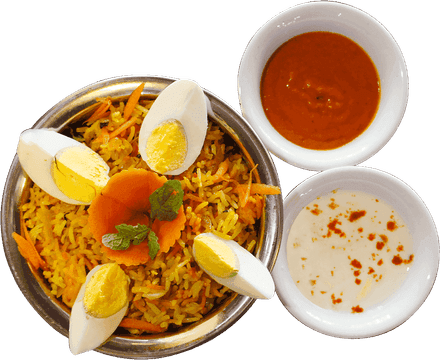
What comes out of that history is a cuisine known as much for its aroma as its taste — nowhere more so than in a well-made biriyani. At Malabar Palace, that is the tradition we cook from.
Indian Spices
Kerala has been one of the world's great spice exporters since 3000 BCE, trading cardamom, ginger, turmeric and black pepper with Arab, Chinese and European merchants long before those routes had names. That legacy still defines the kitchen today — whole, ground, roasted and tempered spices, layered by hand into every dish.
“Once there was a time when the whole world was enamored of the fragrance of Kerala.”
— Sugatha Kumari, Keralite poet & ecologist
Indian Tradition
India's culture spans thousands of years and dozens of regional traditions — the birthplace of Hinduism, Buddhism, Jainism and Sikhism, and home for centuries to Christianity and Islam. That diversity shows up at the table as much as anywhere else: in festivals that mark the calendar, from Diwali and Onam to Eid and Christmas, and in the classical dance and music — Bharatanatyam, Kathakali, Kuchipudi — that still shape how food, celebration and hospitality come together.
Fresh Ingredients
Across India, what's cooked follows what grows nearby. Northern kitchens favour peanut oil, the east cooks in mustard oil, and in Kerala it is coconut oil — pressed from the coast's own groves — that gives Malabar dishes their distinct richness. Traditionally, a Kerala meal is served on a fresh banana leaf, eaten with the right hand, wet and dry ingredients mixed together as you go.
The Malabar Experience
At Malabar Palace, we want every table to carry a little of Kerala's village traditions — its elephant processions and boat festivals, and above all Onam, the state's biggest festival. Falling in the Malayalam month of Chingam (August–September), Onam marks the homecoming of the legendary King Mahabali and is celebrated with an intricately petalled Pookalam, an elaborate Onasadya feast, the roar of the Snake Boat Race and the rhythm of Kaikottikali dance.
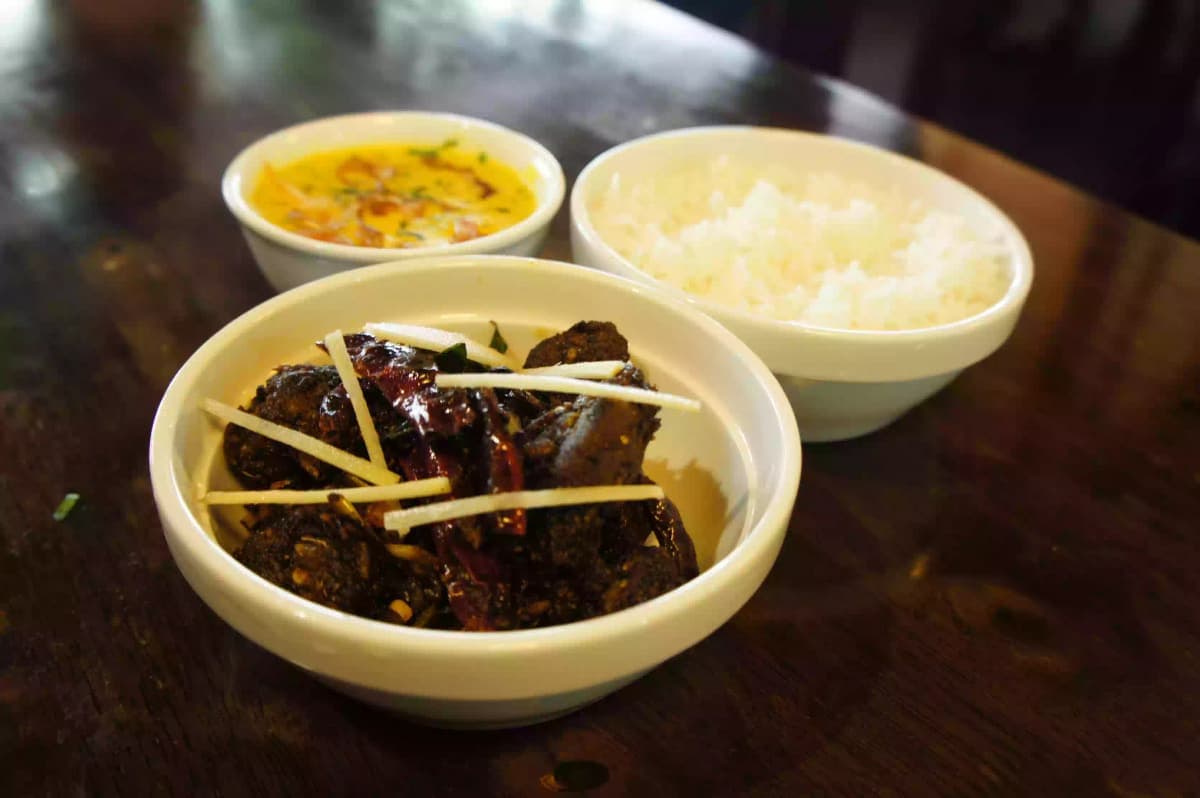
In that spirit, no meal here is complete without pickles and chutneys for piquancy, rice, a thin spiced dal to moisten the dry dishes, cooling yoghurt for the fierier curries, and a scattering of crisp savouries.